

Educated Guesses.
Your vagina has been operating under outdated guidance.

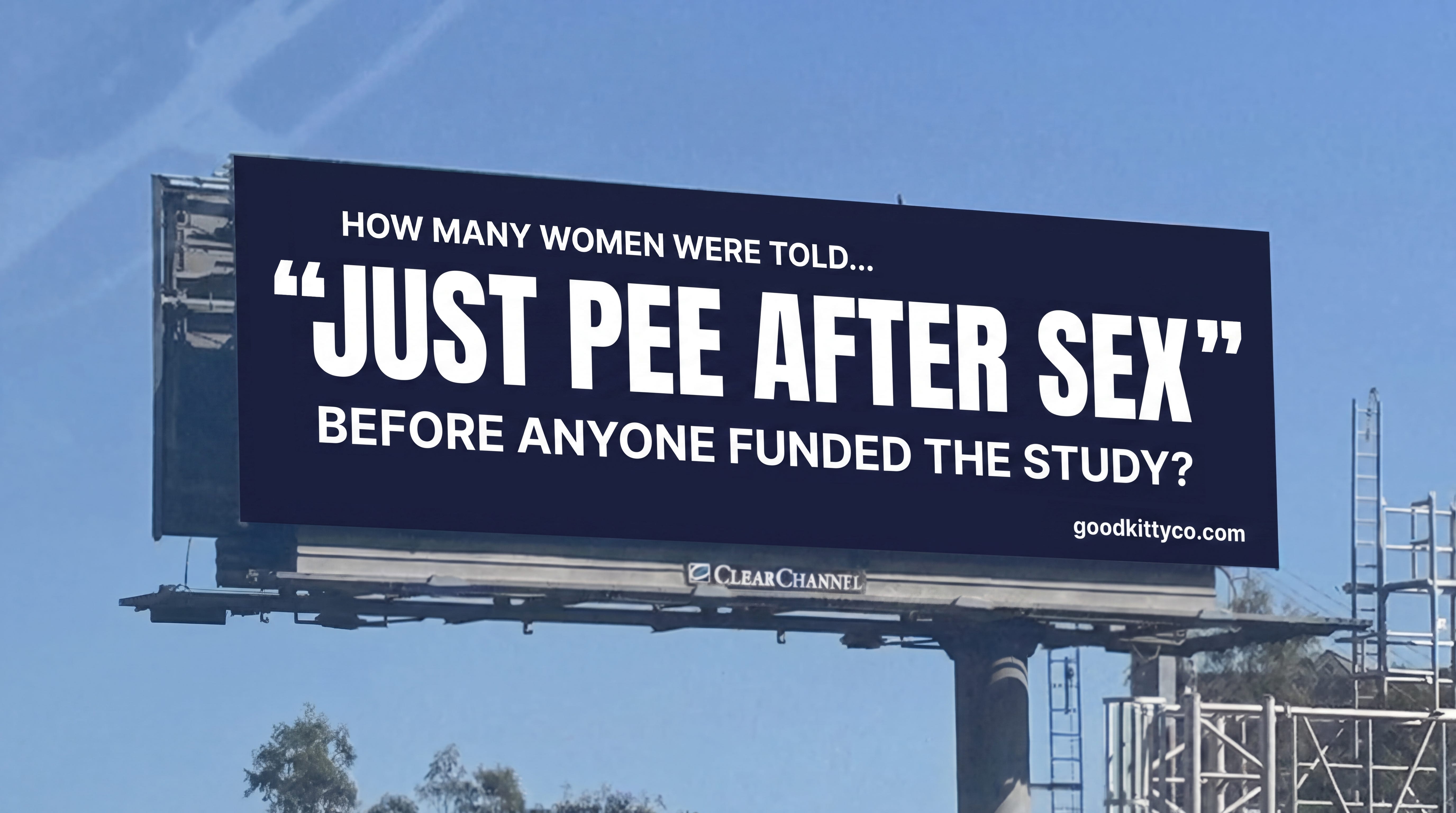
I’ve never been much of a rule follower.
That’s gotten me into some spectacular situations over the years. Fortunately, I’m a decent talker, reasonably charming, and blessed with an almost irresponsible amount of good luck. It’s amazing how many bad decisions those three qualities can erase.
UTIs were different.
I’m not naturally obedient, but recurrent UTIs have a remarkable ability to make you anxious about something that’s supposed to be fun. And sex is one of my favorite sports. I like to think I’m pretty good at it. Curious. Experimental. My Summer of the Butt taught me there are, in fact, some very important rules. Mostly that certain traffic should remain one-way. I still have fantasies. I’m just retired from the event.
So I did what every woman is told to do.
I peed after sex. Immediately.
I treated post-sex urination like it was mandatory. The second we were done, I was already headed for the bathroom. Somewhere along the way I also became the designated post-coital housekeeping staff. I don’t know who negotiated that treaty, but women seem to have signed it without reading the terms. Obviously, since I was headed that way, I was expected to return with a warm washcloth and perform penis maintenance. Meanwhile, I couldn’t have cared less if I dripped across the house. Old hardwood floors and vintage Turkish rugs cover a multitude of sins.
I drank cranberry juice by the gallon. I wiped front to back. Cotton underwear became a measure of moral character. Every recommendation was another item on the invisible checklist women carry around. Pee. Wipe right. Drink all the water. Don’t sit in a wet swimsuit. Having lady parts is hard.
I followed the protocol with the devotion of someone trying to get through TSA with a full-size shampoo.
In 2014, I had thirteen UTIs. For anyone keeping score, that’s more than one a month. And if you’re competitive, this isn’t a category you want to win. Thirteen feels more like I’m beta testing an unfinished product.
When I asked my doctors why, I was eventually promoted to the “some women are just more prone” department.
That answer was super irritating. And yet nothing changed. Not the A+ infection rate. Not the protocol. Just more antibiotics and more shrugs.
Then, as seems to be happening with alarming frequency these days, Reddit became a surprisingly competent member of my healthcare team.
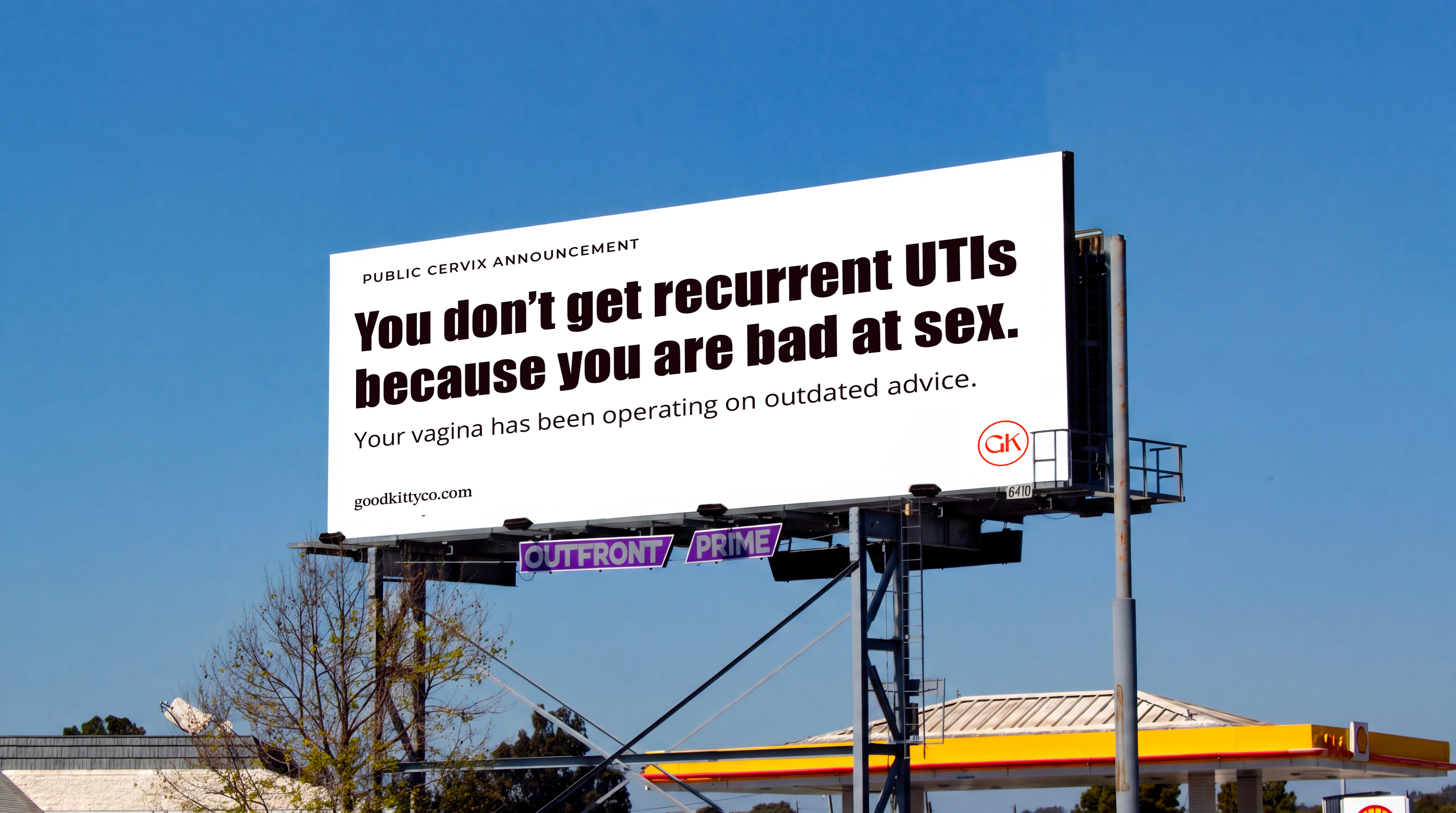
What the woman posted on Reddit
A woman on Reddit had done something that should probably embarrass the entire medical establishment.
She looked for the studies and found... almost nothing.
No large-scale randomized controlled trials proving that peeing after sex prevents UTIs.
Wait. Had to read that part again.
She wasn’t saying peeing after sex doesn’t work.
It’s that we don’t actually have the kind of evidence you’d expect for advice that’s been handed to basically every sexually active woman since the invention of indoor plumbing.
Like me, she assumed there was a towering stack of beautifully funded studies confirming what every gynecologist had been telling us forever.
Instead, she found a handful of small studies, some older research, and decades of clinical recommendations largely citing one another.
There's actually a name for the standard this advice fails. It's called evidence-based medicine, the idea, formalized out of Harvard in the nineties, that medical decisions should rest on the best research available, with a big randomized trial at the top and "a doctor told me so" near the bottom. By that standard, "every gynecologist recommends it" is the weak evidence, and "no one ran the trial" is the whole problem.
The absence of evidence doesn’t mean the advice is wrong.
It tells us what we never bothered to study.
Women’s health has been underfunded and understudied for so long that we’ve quietly lowered our standards for what counts as “well established.” Somewhere along the line, educated guesses started arriving dressed as certainty.
Then a microbiologist showed up, because Reddit is where experts now materialize like woodland creatures.
She, which somehow made the whole thing even better, explained the biology.
Unfortunately, E. coli are clever little assholes. They come equipped with tiny hair-like structures called fimbriae that act like microscopic grappling hooks, working their way toward your kidneys. Urination during that window can flush most of them out before they get comfortable enough to settle in.
A third commenter made the connection I’d been living for years.
This is exactly how anti-adhesion supplements like D-mannose and clinical-dose cranberry PACs work. They don’t kill bacteria. They stop them from sticking in the first place.
Preventing UTIs is a team sport. And E.coli plays to kill.
Women still don’t have the roster of confirmed players. And we still act like one player is enough.
I closed Reddit and immediately thought about my thirteen UTIs. Then about every woman I’d ever met who’d been advised about her body with complete confidence and almost no discussion about how confident the underlying research actually was.
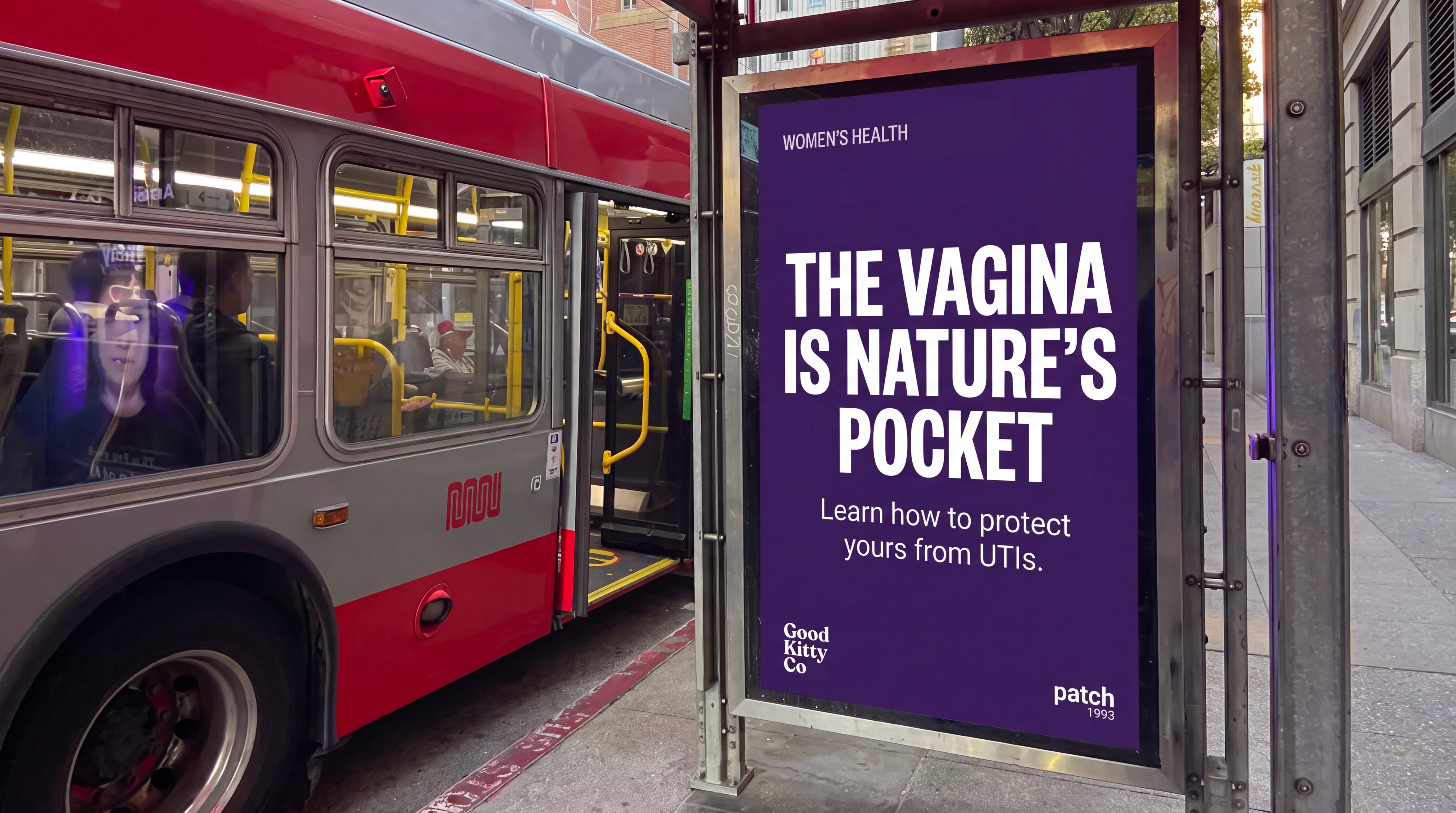
Here’s where things get squirrelly.
Some things are actually pretty straightforward.
Peeing after sex provides a mechanical flush. Bacteria that haven’t had time to attach to the bladder wall get washed away. That mechanism makes perfect sense and very few people argue with it.
We have a handful of small observational studies, several of them decades old, pointing at fewer UTIs when you pee after sex. The Cleveland Clinic recommends it. The American Urological Association recommends it. Every gynecologist I’ve ever seen recommends it.
Great. Super useful.
What surprises me is what we still don’t know.
It never occurred to me that “recommended” and “proven” weren’t synonyms.
We don’t have a large, randomized controlled trial that would normally accompany advice this universal.
Imagine if men had been told to perform one specific behavior after sex to prevent a common condition for the last fifty years. Do you think a few observational studies from the nineties would have been enough to call it a day?
Hard stop. We’d know the optimal timing, the ideal frequency, whether hydration changes the odds. There’d probably be an app. CockClock, which probably already exists.
Instead, women get a mechanism that makes good scientific sense and almost no one willing to fund the study that would prove it.
Which is what makes this so maddening. The advice is probably right. But the confidence sitting on top of it is much thicker than the evidence underneath.
So pee after sex. I’m just over a research system that has taught women to mistake consensus for certainty.
This Is Not an Isolated Case
Once I noticed the certainty gap, I couldn’t unsee it. And it wasn’t just peeing after sex.
Now it was perimenopause.
Heart palpitations.
Brain fog.
Frozen shoulder.
Dry eyes.
Burning mouth syndrome.
Hair thinning.
Electric shocks.
Joint pain.
Tinnitus.
At some point estrogen became the Kevin Bacon of hormones. Somehow everything is six degrees away from it.
Every one of those symptoms is documented. Yet women in their forties and fifties still bounce from specialist to specialist collecting diagnoses like airline miles because nobody was trained to connect the dots. The information exists in the literature. It just hasn’t been translated into the average clinical encounter.
Vaginal estrogen reduces recurrent UTIs by fifty to sixty percent in postmenopausal women while remaining wildly underprescribed. Fifty to sixty percent. And it’s not a rounding error. This is a treatment we’re leaving on the table because prescribers were trained twenty years ago when the WHI misinterpretation scared everyone off estrogen and nobody updated the syllabus.
It’s endometriosis taking seven to ten years to diagnose. And when researchers finally got around to studying it, there is a real body of endometriosis research whose central concern is how the disease affects men’s sexual satisfaction. There is a 2025 paper literally titled “Supporting men who support women with endometriosis.” Naturally, we needed to dig further into how the disease was affecting the men.
Women are bleeding.
But the research question became, “How are the men holding up?”
I wish I were making that up.
There’s adenomyosis, which most primary care doctors couldn’t reliably differentiate from endometriosis. It’s PCOS, chronic pelvic pain, interstitial cystitis, vulvodynia, PMDD.
Different diagnosis. Same fucking bullshit.
Women report symptoms. Research lags behind. Clinical guidance fills the gaps with confidence. We assume the confidence came from actual evidence.
Sometimes it did. Sometimes it didn’t.
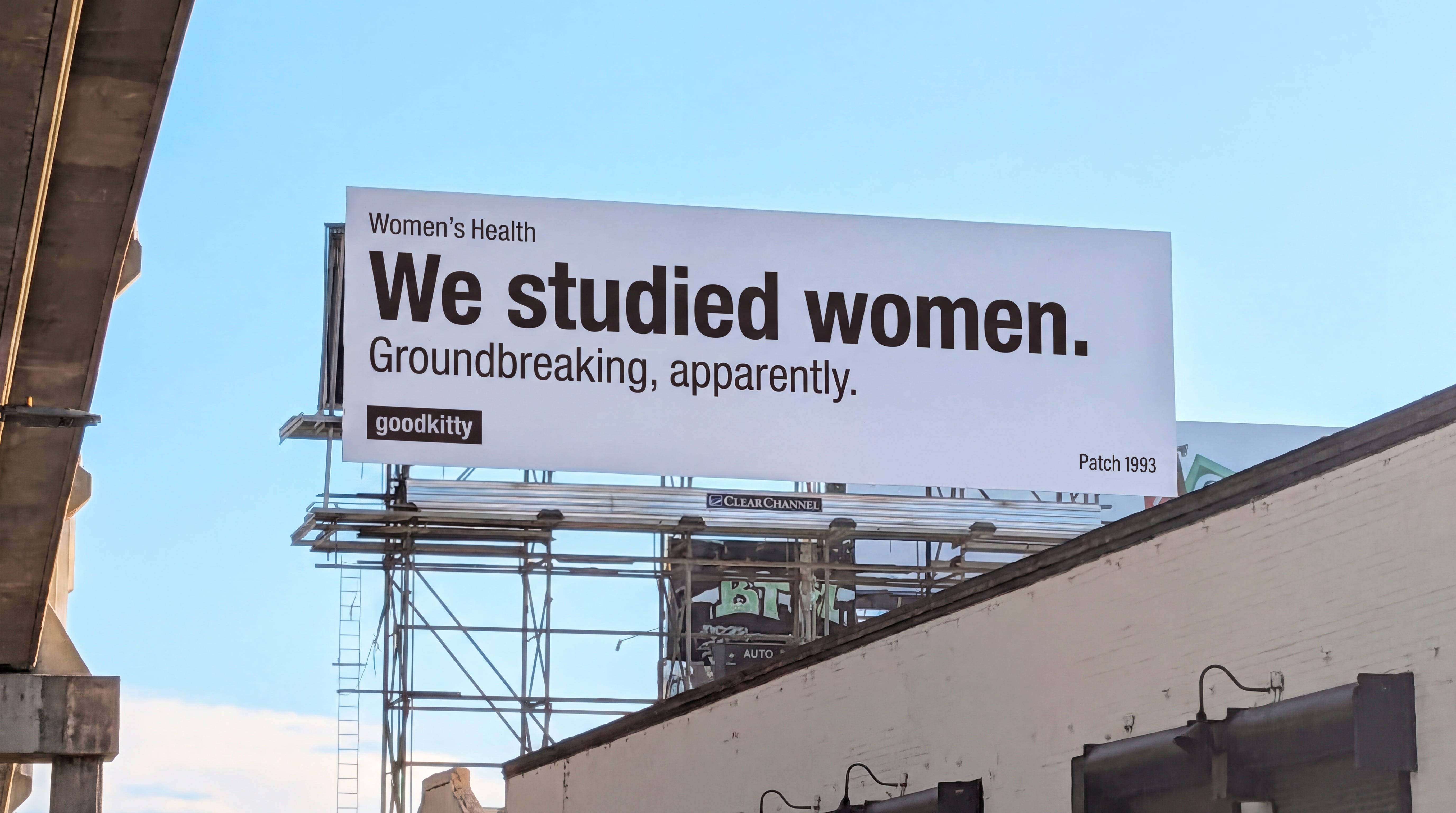
The U.S. government didn’t require women to be included in federally funded clinical research until 1993.
Nineteen ninety-three.
Jurassic Park came out that year.
Apparently, velociraptors got the green light from modern science before women did.
To be fair, women weren’t literally banned from every study.
The real story is worse, because it made sense at every step. In the early sixties, a drug called thalidomide, taken for morning sickness, caused thousands of babies to be born with severe deformities. Regulators panicked, understandably. If a drug could do that to a fetus, keeping women who might get pregnant out of drug trials looked like the responsible thing to do.
So in 1977, the FDA put it in writing. It recommended that women of childbearing potential be left out of early drug studies, which in practice meant most women. The intent was protective. The result was decades of medicine tested mostly on men and quietly assumed to work the same on everyone else.
And it went deeper than the humans. The lab mice were male. The cells in the petri dishes were male. We built the foundation of modern pharmacology on male biology and then acted surprised when women reacted differently to the same drugs. We are still considered small males.
By 1993 it was impossible to ignore. The NIH Revitalization Act finally made including women the law instead of a polite suggestion, and told researchers they couldn’t use cost as an excuse to leave us out. That same year the FDA dropped its 1977 exclusion. So 1993 isn’t the year a woman first walked into a trial. It’s the year the country stopped treating our absence as normal.
Nobody twirled a mustache and decided women didn’t matter. Institutions fail because of a thousand perfectly reasonable decisions.
Protect the fetus.
Don’t complicate the data with hormones.
Teach what you were taught 50 years ago.
Repeat.
Nobody noticed the accumulation.
That’s how you wake up decades later discovering that millions of women have been handed recommendations with far more certainty than the research beneath them could support.
So Women Gossip
Women have an almost annoying habit of solving the problems nobody asked us to solve.
Leave us with a vacuum and we’ll eventually build another institution.
It just happens to run on Reddit and group chats and screenshots of lab results and that one friend who somehow always knows the good gynecologist. Every friend group has one. It’s telehealth portals we pay out of pocket for because our regular doctors couldn’t or wouldn’t order the right labs.
We compare notes on which HRT protocol actually worked and which one made things worse. We swap the names of urogynecologists who take chronic UTI seriously. We forward each other studies we’ve dug up on adenomyosis or PMDD. We warn each other about the doctor who dismissed our joint pain. We celebrate the one who finally connected our brain fog to hormones.
There are no citations. No peer review. No CME credits.
It’s still, frequently, better than what we got from the system that was supposed to know.
The rise of femtech is the market response to institutional neglect. This is the shape of a vacuum being filled.
At this point, I’m basically my own healthcare case manager.
I order my own labs.
I track my own hormone baselines.
I use topical estrogen on my face and my puss because estrogen apparently doesn’t care where it disappears from.
There’s a testosterone pellet in my ass.
I have a myriad of hair supplements and topicals because, say it with me, women’s hormones are doing what they have done to women since Eve.
Between hormones, lab work, prescription creams, hair treatment, supplements and everything else, I have enough prescriptions to qualify as my own specialty clinic.
Four years ago, Dr. Meghan Blake and I cofounded Good Kitty because we’d both lived the same story. We’d followed the rules.
We peed after sex.
We’d taken the antibiotics.
We’d followed the protocol.
We’d been good fucking girls.
And it wasn’t enough.
So we built the thing we wished someone else had.
I’m not here to tell you to burn down the medical system. It has its uses. I still see my doctors, still get my labs run, still tell women to see a provider when something’s serious.
But I’ve changed how I take clinical advice, and it’s worth naming what that looks like in case any of it lands.
I ask what the research actually shows. How big the study was, how recent, and whether the women in it looked anything like me. When a provider tells me something with total certainty, I make a note and check later. Sometimes the confidence is earned. Sometimes it isn’t. My primary care doctor isn’t offended by any of this. If yours is, they can get fucked.
I trust my body. Thirteen UTIs in a year on the standard protocol is a signal that the protocol was incomplete. If your body is producing symptoms that don’t match the story you’re being told, your body is right and the story is wrong.
I compare notes with other women. The peer-reviewed literature in my group chat has caught things my providers missed. This isn’t a joke. It’s my life.
I pay out of pocket when I have to. It’s an unfair system that treats real medical needs as boutique wellness, but refusing to pay is just refusing my own care.
The Absence of Evidence
The woman on Reddit was right. But not about proving peeing after sex doesn’t work. She didn’t.
I still pee after sex.
This is something that will continue till my vagina falls out or I die. I’m just no longer willing to mistake a rule for an answer.
The absence of evidence tells its own story.
It tells us what was studied and, more importantly, what wasn’t.
It tells us whose suffering counted as a research priority and whose became folklore passed from one woman to another.
That’s actually the real story.
Not that women have been giving each other medical advice in group chats.
It’s that we’ve fucking had to.
Turns out the thing that needed flushing wasn’t just my bladder.
Maybe it’s time we renegotiated the treaty.
I’m 48. I cofounded Good Kitty Co. four years ago with Dr. Meghan Blake. I’ve been writing Perfectly Unsuitable for less than a year. If you want to talk about this, the comments are open. If you know someone this would resonate with, forward it. The underground research infrastructure runs on women sharing what they’ve learned. The more we share, the better it gets.
More From Perfectly Unsuitable
If this essay resonated, the pieces below are some companions:
The Renegotiation → — The foundational essay this piece builds on.
censHERship Part I: The Algorithm Blushes → — On visibility, suppression, and who gets to talk about women’s bodies.
Nihilism as a Business Strategy: UTI Prevention, Chokers and Meaning Making → — On building a brand from a systemic gap.
What Happened to Sisterhood → — On the peer knowledge infrastructure women are building.
Full disclosure: I cofounded Good Kitty Co. It’s at goodkittyco.com if you’re curious. But this essay isn’t about that. It’s about all of us, and the research that was never funded, and the studies we’re doing on ourselves in real time.
References
No randomized controlled trial has tested post-coital urination on its own; the practice rests on a mechanical rationale plus small observational data. American Urological Association / SUFU, Recurrent Uncomplicated Urinary Tract Infections in Women guideline (2019, amended through 2025). ↩
On anti-adhesion approaches: Hayward G, et al., trial of D-mannose for recurrent UTI, JAMA Internal Medicine (2024); Williams G, et al., “Cranberries for preventing urinary tract infections,” Cochrane Database of Systematic Reviews (2023). ↩
The supporting evidence is a handful of small, mostly older observational studies. Both the Cleveland Clinic and the American Urological Association recommend post-coital voiding. AUA/SUFU guideline (2019, amended 2025); Cleveland Clinic patient guidance on UTI prevention. ↩
Tan-Kim J, et al., vaginal estrogen and recurrent UTI, American Journal of Obstetrics & Gynecology 2023;229(2):143.e1–143.e9 — mean UTI frequency fell from 3.9 to 1.8 per year, roughly a 52% reduction. Foundational RCT: Raz R, Stamm WE, New England Journal of Medicine 1993;329(11):753–756. ↩
Reviews place the diagnostic delay at roughly 7–10 years from symptom onset. See the 2024 BJOG systematic review on time to diagnosis and the ComPaRe-Endometriosis cohort (Breton et al., 2025), which reported an average delay of 10 years for endometriosis and 11 for adenomyosis. ↩
Keany J, Fox C, Nahon I, “Supporting men who support women with endometriosis,” 2025 (SAGE; DOI 10.1177/22840265251393003). ↩
NIH Revitalization Act of 1993, Public Law 103-43, which for the first time required the inclusion of women in NIH-funded clinical research. ↩
The 1977 exclusion policy was a reaction to the thalidomide tragedy; the sedative, taken for morning sickness, caused severe birth defects in thousands of infants, largely in Europe, Canada, and Australia. NIH Office of Research on Women’s Health, “History of Women’s Participation in Clinical Research.” ↩
In 1977 an FDA policy recommended excluding women of childbearing potential from Phase 1 and early Phase 2 drug trials — broad enough to cover women using contraception or who were single. Merkatz RB, et al., “Women in Clinical Trials of New Drugs — A Change in FDA Policy,” New England Journal of Medicine 1993;329(4):292–296. ↩
On the male-default bias in animal and cell research, which prompted the NIH’s 2016 Sex as a Biological Variable policy: Clayton JA, Collins FS, “Policy: NIH to balance sex in cell and animal studies,” Nature 2014;509:282–283. ↩
The FDA reversed its 1977 guidance in July 1993, one month after the NIH Revitalization Act, mandating the inclusion of women unless exclusion was justified. Merkatz et al. (1993); AAMC, “Why we know so little about women’s health” (2024). ↩
It never ceases to disappoint me how lacking society still is for women. 😓
A good quality probiotic helps too. And it’s not just for your gut , no not yogurt but a good probiotic, there are even vaginal probiotics now too. UTIs often affect the brain as we age and we do and can be our best drs sometimes.